The Dupe Is the Point Now: How Fake Luxury Stopped Being Embarrassing and Became the Whole Personality
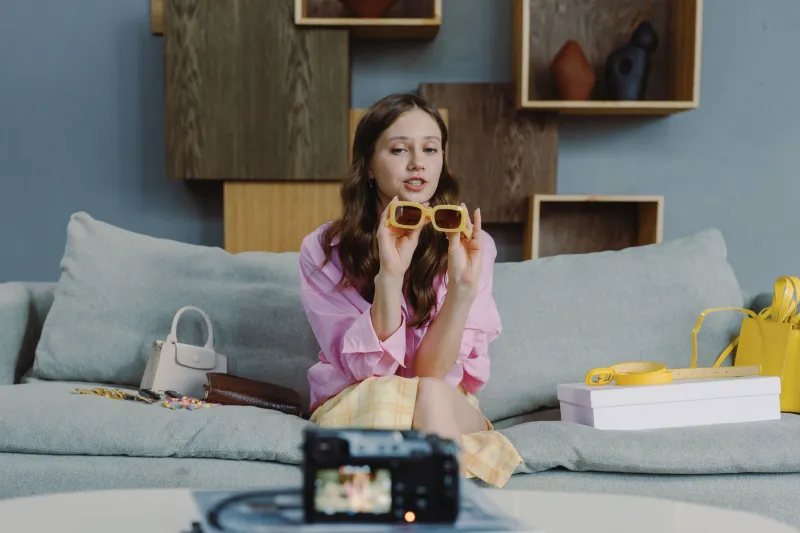
There is a video format on TikTok that has quietly become one of the most culturally loaded things on the internet. You know the one. Someone holds up a bag — a really good bag, the kind that makes your eyes do that involuntary widening thing. They do a slow spin. They let the silence build. And then: "$38. Dupe. Link in bio."
The comments go absolutely feral. "STOP." "She ate the Chanel and left no crumbs." "I need this immediately."
The bag is not real. Everyone knows the bag is not real. Nobody cares that the bag is not real. In fact — and this is the part that should make us all stop and think for a second — the fact that it's not real is kind of the whole point.
Welcome to the dupe era, where the counterfeit has become the aesthetic, the flex has been democratized, and the question of what "authentic" luxury even means has never been more genuinely complicated.
From Back Alley to Main Feed
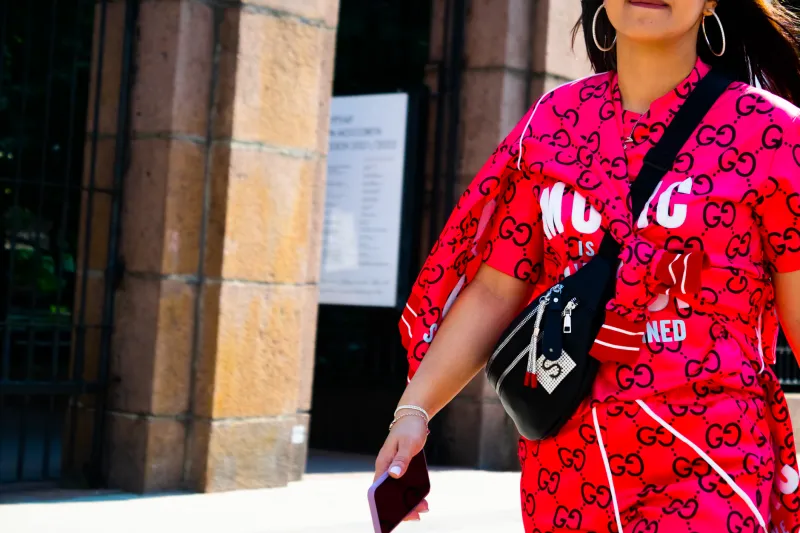
Let's take a quick historical tour, because context matters here. For most of modern fashion history, buying a fake designer item was a transaction conducted with a certain amount of shame baked in. You knew, they knew, everyone knew — and the social contract was that you'd at least pretend the logo was real. Canal Street knockoffs existed in a gray-market purgatory: desired but deniable.
That's not the world we live in anymore.
The shift started accelerating around 2020, when TikTok's algorithm began surfacing "dupe" content to massive audiences. What had been a niche shopping hack — budget bloggers finding the Target version of a $600 sweater — mutated into something bigger and more ideologically loaded. The dupe became a declaration. Not "I couldn't afford the real thing" but "I found the real thing's twin and I outsmarted the system."
The language shifted too. "Dupe" shed its apologetic connotations entirely. Now it's a compliment, a category, a content genre. "Dupe culture" has its own aesthetic, its own community, its own rules.
Gen Z Is Not Playing the Game. They're Flipping the Board.
To understand why this happened, you have to understand how Gen Z relates to aspiration differently than the generations before them.
Millennials grew up adjacent to a cultural moment — the early 2000s, the Sex and the City era — that treated luxury brands as the finish line. The Carrie Bradshaw promise: work hard, be fabulous, eventually own the Manolos. The luxury item was aspirational in the traditional sense. You were supposed to want it and then, one day, earn it.
Gen Z largely looked at that framework and said: absolutely not.
"There's a real cynicism in this generation about the idea that status symbols mean what they used to mean," says Dominique Reyes, a cultural critic and trend analyst based in Los Angeles. "They watched their parents and older siblings do everything 'right' and still struggle financially. The idea that a Gucci belt proves you made it? That reads as naive at best and predatory at worst."
So instead of climbing toward the luxury item, Gen Z started interrogating it. What are you actually paying for? The material quality? The craftsmanship? Or the logo — which is, when you strip it down, just a symbol that other people have agreed to assign value to?
And if it's mostly the logo... well. Logos can be replicated.
"I'm Not Buying a Bag. I'm Buying the Look."
We talked to a handful of Gen Z consumers about their dupe habits, and the intellectual clarity they brought to the conversation was honestly kind of startling.
Alexa, 23, from Miami, has an entire TikTok account dedicated to luxury dupes. "I own a 'Bottega Veneta' bag that cost me $45," she told us, making deliberate air quotes. "Nobody has ever questioned it. And even if they did — who cares? I'm not trying to trick anyone. I'm just not willing to pay $4,000 for a weave pattern."
Tyler, 25, from Portland, Oregon, pushed back slightly on the mainstream dupe enthusiasm but acknowledged the cultural logic. "I get it. The fashion industry has been charging insane markups on the idea of exclusivity for decades. Dupes are kind of just calling the bluff. Like — if everyone can have the look, what were you even selling?"
Jada, 21, from Houston, had perhaps the sharpest take: "Real luxury was always about making other people feel excluded. That's literally the product. I don't want to participate in that. My dupe does the same thing aesthetically and doesn't fund a system I disagree with."
But Wait — Is This Actually Fine?
Okay, so here's where we have to pump the brakes slightly and acknowledge the parts of this conversation that don't fit as neatly into the empowerment narrative.
For one: the dupe economy is not consequence-free. Counterfeit goods — particularly at the higher end — have documented connections to exploitative labor practices and, in some cases, organized crime. The ethical picture is murkier than "I outsmarted Chanel."
For another: there's a real question about whether dupe culture actually disrupts status hierarchies or just... reproduces them more cheaply. If the whole point is still to look like you have the expensive thing, haven't you just agreed that the expensive thing is the standard? "The dupe is still paying homage to the original," Reyes points out. "It's aspirational, just from a different angle. The reference point is still luxury."
And then there's the authenticity question, which is where it gets genuinely philosophical. Gen Z talks a lot about authenticity — it's arguably their most prized cultural value. But is performing wealth you don't have, even ironically, even self-awarely, actually authentic? Or is it a very sophisticated version of the same old performance?
"I think the answer is 'it's complicated,'" says Reyes. "And Gen Z, to their credit, is mostly comfortable with that. They're not claiming this is a pure political act. They're saying: the system is broken, I'm going to navigate it in the way that works for me, and I'm going to be transparent about it. That transparency is where the authenticity actually lives."
The Real Flex Is Knowing It's a Dupe
Maybe that's the most interesting thing about dupe culture's current iteration: the disclosure is the move. You're not hiding the receipt. You're showing the receipt. The $38 is part of the story. The "dupe check" is the content.
In a media landscape saturated with aspirational imagery that's always been at least partially fake — filtered, staged, sponsored — there's something weirdly refreshing about someone looking into a camera and saying: this is not real, here's how much it cost, and I look incredible.
Is it a perfect system? No. Is it more honest than pretending the $4,000 bag is just a bag? Possibly.
The luxury industry is watching all of this very carefully, by the way. Some brands are responding with legal action. Others are responding by leaning into their "real" story harder than ever — provenance, craftsmanship, heritage. A few are doing something even more interesting: collaborating with the dupe culture rather than fighting it.
Because here's what the fashion houses are slowly, reluctantly learning: when the dupe becomes the aesthetic, the original has to figure out what it's actually selling.
And the answer, it turns out, might not be a bag at all.